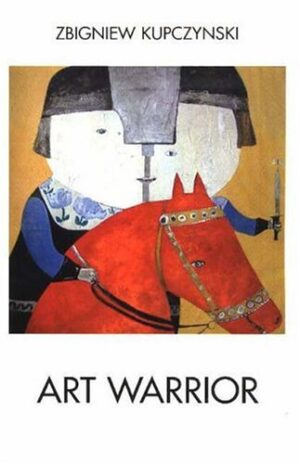
Art Warrior
Art, Music and Architecture
Showing 1–12 of 14 results

Showing 1–12 of 14 results
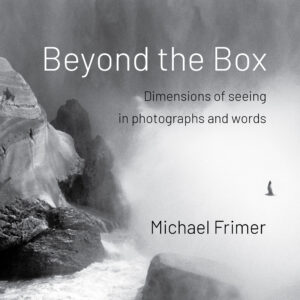
Born and raised in Toronto, Canada, Michael Frimer attended medical school at the University of Toronto before accepting an internship in general surgery at Vancouver General Hospital, where he became the youngest surgeon in Canada at the time, at age 29. Frimer is an award-winning dark room and large format photographer, with an avid curiosity and desire to tell stories through the process of creativity, often using his images to explore moments captured in time and to observe life as a series of overlapping dimensions that one must look beyond to see life’s bigger picture. He has sung with the University of Toronto choir, the Toronto Symphony Orchestra and the Cantata singers in Vancouver. A respected surgeon for over 50 years, Frimer retired from practice in 2018.
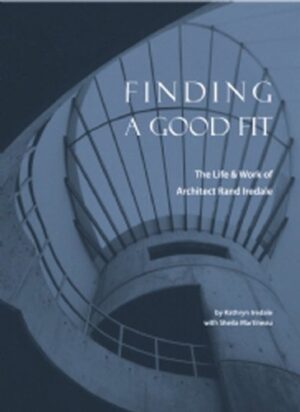
Kathryn Iredale enjoyed a long and happy family life with her husband, Rand. She worked alongside him for many years, and has a keen understanding of the architectural profession and of Rands professional practice. Their careful cataloguing of materials laid the foundation for her pursuit of this ambitious project. Kathryn lives in Vancouver, BC.
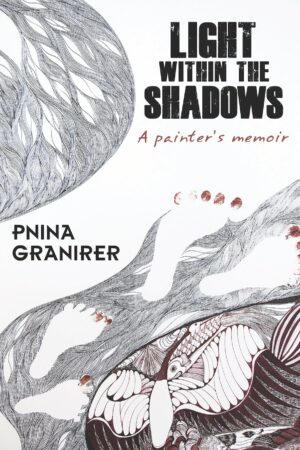
Pnina Granirer was born in Romania and immigrated to Israel in 1950. She studied at the Bezalel Art Academy in Jerusalem and came to Canada in 1965, settling in Vancouver where she has lived ever since. Her works are displayed in private and public galleries and museum collections in Canada, the US, Chile, Europe and Israel. An extensive archive of documentation on her work and life can be found in the British Columbia Artists’ Archives at the University of Victoria, BC.
Granirer has always followed her own vision, taking risks by disregarding the trends and fashions of the art world. In 1993 Granirer co-founded Artists in Our Midst, the first annual Studio Tour in Vancouver, BC. For six years she organized and hosted discussions about art via Philosopher Art Cafes sponsored by Simon Fraser University. She has been featured in several films, including Pnina Granirer: Portrait of an Artist (1989) and The Trials of Eve (1992).
In 2014 the artist was included in the encyclopedia of International Surrealism by Arturo Schwarz, Il Surrealismo—Ieri e Oggi (Italy) and in a five-page chapter of José Miguel Pérez Corrales’s Anthology, Surrealismo: El Oro del Tiempo (Spain).
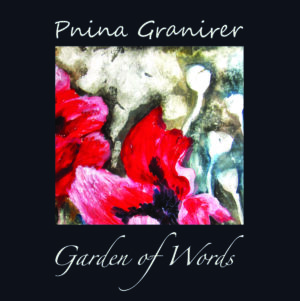
A visual artist for over 60 years, Granirer has also written verse since her childhood. Garden of Words contains musings that both reflect and illuminate her paintings. The sculpted stones in the Gulf Islands, the joy of watching dancers’ bodies in movement, the shadow of a new plague, and the contemplation of being human in a complex world—all are an expression of Granirer’s wish “to plant a garden of words in [her] field of colours.”
You’re invited to visit her website: www.pninagranirer.com
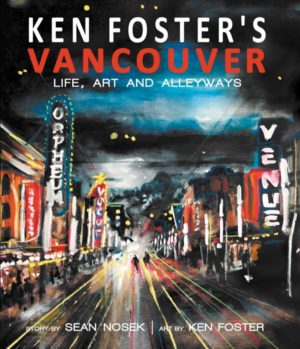
Sean Nosek has spent decades mastering the art of wandering. He has a particular affinity for back alleys, bookstores, and vintage shops. A former literature teacher, he is currently Assistant Superintendent of West Vancouver Schools. Sean is inspired by great works and great ideas, and believes wholeheartedly in “the creative life.” His blog, Zen for a Crazy World, has received international acclaim. He makes his home in Vancouver, Canada. He is happily married and the proud father of two daughters.
Ken Foster is a Vancouver artist who has spent more than two decades hocking his art on the street in order to survive. Born in 1970, the artist was adopted by a family in Ottawa, who brought him to Delta in 1978. During his teen years, skate culture drew him in: “it had the right degree of danger and was suitably badass and anti-authoritarian.” Best known for producing work on found material, Ken has become something of a local legend. At one low point, he spent eighteen months sleeping in an alleyway. Today, his followers consider his alleyway paintings to be iconic.
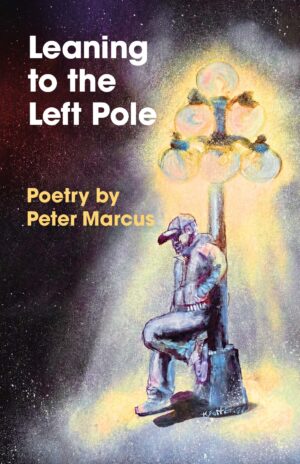
Peter Marcus was born in 1945 in Toronto. He moved to Vancouver in 1966. He found steady work in the health care system as a cleaner and later as a transport attendant and retired in 2002. He was an activist in the Hospital Employees’ Union and a member of the Communist Party of Canada. His first book, A Worker’s Friend, was published in 2019.
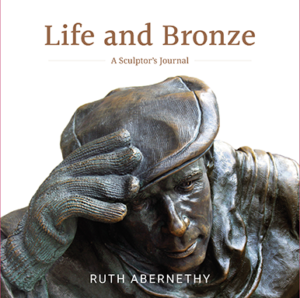
Ruth Abernethy overlaid her early mastery of needlework and lace-making with woodworking skills she acquired at her grandfather’s side. Then, as a teen, the many hours she played on stage with her musically-gifted family served as a bridge into imaginative theatre workshops across the country. In theatre, Ruth used all her hand skills to develop new structures and illusions. Ruth’s inventiveness found a further outlet in a collaborative home and studio design with her husband Mark Smyth in Wellesley, Ontario. While nurturing two sons at “The Flats”, Ruth created sculptures that present droll commentary on the human condition. The bronze portraits she developed are iconic figures in streetscapes across Canada.
Pnina Granirer has exhibited widely during the 52 years of her life in Vancouver. Her works are found in numerous private and public national and international collections, such as the Glenbow Museum (Calgary, Alberta), the Yad Vashem Museum (Jerusalem, Israel), the Art Gallery of Greater Victoria, BC, the Two Rivers Gallery (Prince George, BC), the Richmond Art Gallery, the Art Gallery of Hamilton (Ontario), Museo Eugenio Granell (Spain), the Museo Nacional de Bellas Artes (Chile) and more.
In 2014 Pnina was included in the extensive encyclopedia of international surrealism by Arturo Schwarz, Il Surrealismo: Ierie Oggi (Italy), and in Jose Miguel Pérez Corrales’s anthology, Surrealismo: El Oro del Tiempo (Spain), in a 5-page chapter.
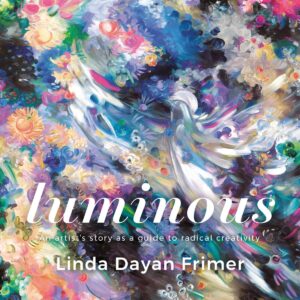
Linda Dayan Frimer is an internationally recognized artist whose work addresses questions of culture, memory, trauma and reverence for the natural environment. She is a celebrated facilitator and painter who produces cultural, commemora- tive, educational and esthetically powerful contributions, and whose artworks have been described as “impactful,” “stun- ning,” “emotionally moving,” “enthralling” and “meaningful.”
Born in the wilderness town of Wells, British Columbia, from a young age Frimer was immersed in in the wonder of the forest, rivers and mountains. It was in these formative years, surrounded by the awe-inspiring natural landscape, that Frimer developed her creative vision. It was also during these early years when she first learned of war and cultural suffering. Becoming determined to champion and protect the sanctity of all life forms, Frimer turned to the creation of art as her natural medium.
Frimer’s artworks have repeatedly been called upon to represent—through fundraising, awareness and education—the work of environmental organizations, such as the Trans Canada Trail, the Raincoast Conservation Foundation and the Western Canada Wilderness Committee, who promote Canada’s vast cultural and geographic diversity, wilderness preservation and the interdependency of nature and wildlife, and spread knowledge about endangered species. Paul George, former Director of the Western Canada Wilderness Committee, has offered that perhaps equally important to the fundraising, Frimer’s work “touched upon the emotional and spiritual cords, where real change occurs.”
Alongside Frimer’s artworks championing the environment, significant collections and donations of her works have support- ed Margaret Laurence House, Canadian Red Cross, Canadian Cancer Society, Vancouver General Hospital, Richmond General Hospital, Children’s Hospital Foundation, Wells Community Hall and the Vancouver Art Gallery, among others. She is the recipient of many awards, including an Honorary Doctor of Letters from the University of the Fraser Valley. Her murals illuminate hospital walls, synagogue sanctuaries and university corridors, where it has been said they “offer healing colours that contain emotional, life enforcing light, a calming rhythmic movement and imaginative forms that are visionary.”
Frimer has facilitated cultural healing workshops between various cultural groups. She is co-founder and facilitator of the Gesher Holocaust Project, in which she developed techniques and worked with multi- generations of Holocaust survivors and their children to release trauma through art. This project resulted in the creation of powerful commemorative works of art that were exhibited throughout major cities in North America under the auspices of the Montreal Holocaust Centre.
Frimer is co-author of In Honour of Our Grandmothers: Imprints of Cultural Survival, a collaboration between two Jewish and two First Nations artists and poets that brought together research and creative exploration as a means to process trauma associated with cultural oppression and at- tempted genocide. In her book A Wilderness Journey, Frimer explores the inextricable link between her own ancestral story, her love of the wilderness and cultural resilience.
You can view more of linda’s book here.
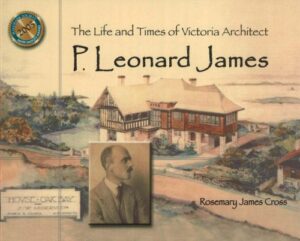
Rosemary James Cross, an artist and writer, was born in Victoria, BC where she and her husband raised three children.
After art studies and living in many parts of Canada, she became a well-travelled teacher of art recognized for her highly individual style. Rosemary also has had many solo gallery showing off her work.
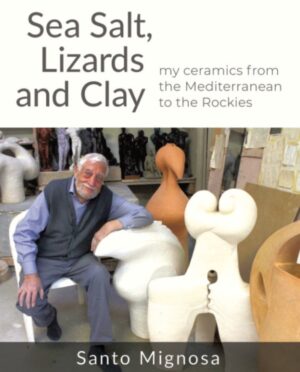
Born and raised in Sicily, Italy, Santo Mignosa studied clay in several Italian institutions after working for his father creating commercial roof tiles and bricks.
Arriving in Canada in the 1950s, Mignosa continued his studies, entered numerous national and international exhibitions and embarked upon a distinctive teaching career at the University of British Columbia’s Kootenay School of Art and at the University of Calgary. He was an active participant in national and provincial ceramic organizations and regularly presented workshops for ceramic groups and local schools.
In his mid-eighties, Mignosa continues his sculptural and drawing practice at Art in the Country in Aldergrove, British Columbia. Amid an ark of animals big and small, Santo is currently investigating the abundance of flora and fauna on a country farm that inspires and nurtures. Here he shares his life with Susan Gorris, a painter and sculptor.
Stephen grew up in a musical family and trained as a jazz musician from a young age. Following his career as a clarinetist and chorus member in the US Air Force Band, he entered Columbia University to major in psychology and pre-med. He became a medical doctor and eventually a psychiatrist. At home and abroad, he has enjoyed playing both the clarinet and the saxophone, rubbing shoulders and sharing the stage with many extraordinary musicians. He lives in New York City.