Life, Love and Laughter
Biography and Memoir
Showing 13–24 of 27 results

Showing 13–24 of 27 results
Linda Dayan Frimer is an internationally recognized artist whose work addresses questions of culture, memory, trauma and reverence for the natural environment. She is a celebrated facilitator and painter who produces cultural, commemora- tive, educational and esthetically powerful contributions, and whose artworks have been described as “impactful,” “stun- ning,” “emotionally moving,” “enthralling” and “meaningful.”
Born in the wilderness town of Wells, British Columbia, from a young age Frimer was immersed in in the wonder of the forest, rivers and mountains. It was in these formative years, surrounded by the awe-inspiring natural landscape, that Frimer developed her creative vision. It was also during these early years when she first learned of war and cultural suffering. Becoming determined to champion and protect the sanctity of all life forms, Frimer turned to the creation of art as her natural medium.
Frimer’s artworks have repeatedly been called upon to represent—through fundraising, awareness and education—the work of environmental organizations, such as the Trans Canada Trail, the Raincoast Conservation Foundation and the Western Canada Wilderness Committee, who promote Canada’s vast cultural and geographic diversity, wilderness preservation and the interdependency of nature and wildlife, and spread knowledge about endangered species. Paul George, former Director of the Western Canada Wilderness Committee, has offered that perhaps equally important to the fundraising, Frimer’s work “touched upon the emotional and spiritual cords, where real change occurs.”
Alongside Frimer’s artworks championing the environment, significant collections and donations of her works have support- ed Margaret Laurence House, Canadian Red Cross, Canadian Cancer Society, Vancouver General Hospital, Richmond General Hospital, Children’s Hospital Foundation, Wells Community Hall and the Vancouver Art Gallery, among others. She is the recipient of many awards, including an Honorary Doctor of Letters from the University of the Fraser Valley. Her murals illuminate hospital walls, synagogue sanctuaries and university corridors, where it has been said they “offer healing colours that contain emotional, life enforcing light, a calming rhythmic movement and imaginative forms that are visionary.”
Frimer has facilitated cultural healing workshops between various cultural groups. She is co-founder and facilitator of the Gesher Holocaust Project, in which she developed techniques and worked with multi- generations of Holocaust survivors and their children to release trauma through art. This project resulted in the creation of powerful commemorative works of art that were exhibited throughout major cities in North America under the auspices of the Montreal Holocaust Centre.
Frimer is co-author of In Honour of Our Grandmothers: Imprints of Cultural Survival, a collaboration between two Jewish and two First Nations artists and poets that brought together research and creative exploration as a means to process trauma associated with cultural oppression and at- tempted genocide. In her book A Wilderness Journey, Frimer explores the inextricable link between her own ancestral story, her love of the wilderness and cultural resilience.
You can view more of linda’s book here.
Jim Kerr was born in 1945 and was brought up in Kelowna, BC. He attended the University of British Columbia out of high school and dropped out after his first year to hitchhike through Europe and North Africa with his best friend, Blair Campbell.
Soon after, Jim returned to earn an arts degree in economics at UBC, after discovering his knack for quick calculations at currency-exchange booths over the course of his journey. He has lived in Vancouver, BC, ever since and enjoys golfing and travel during his retirement after a successful career as a partner in a national chartered accounting firm.
After many years boring his close friends and family with countless stories of his epic voyage, he committed to writing Meet Me in Cairo at their behest. Jim is married to his wife, Kelly, and has three daughters and one son. He currently spends a quarter of the year travelling around the world, often arranging adventure bike tours with friends to far-flung places such as Chile and Myanmar.
You can read more about Jim and his latest book here.
Luther Schuetze was born to German immigrant parents in Brazil, educated in basic medicine and theology in Germany, and worked for years on farms on the Canadian prairies. He was married with three sons and another on the way when he was called by the United Church to be a minister in Little Grand Rapids. He and his family later moved to Oregon, then to B.C. Luther lived in retirement in Penticton until his death in 1979.
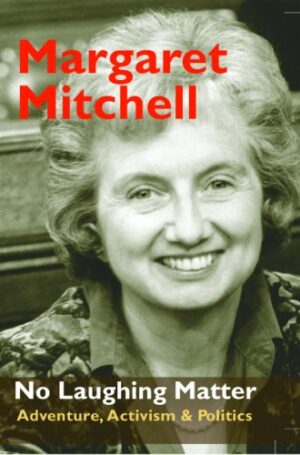
A graduate of McMaster University and University of Toronto School of Social Work, Margaret A. Mitchell worked for the International Red Cross in Japan and Korea during the Korean War and in Vienna in 1956 with Hungarian refugees. Known for her many contributions as a social activist and in community development, she became the NDP Member of Parliament for Vancouver East from 1979 until 1993. She continues to support women in need through the Margaret Mitchell Fund for Women. Recognized in 2000 as a Member of the Order of British Columbia, she lives in Vancouver, BC.
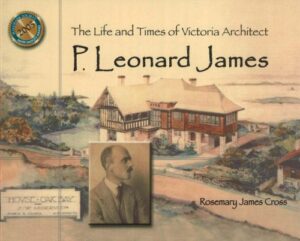
Rosemary James Cross, an artist and writer, was born in Victoria, BC where she and her husband raised three children.
After art studies and living in many parts of Canada, she became a well-travelled teacher of art recognized for her highly individual style. Rosemary also has had many solo gallery showing off her work.
Beth Rowles Scott grew up in rural Saskatchewan. After moving to BC, she earned a BA and a BEd at the University of British Columbia, followed by a Master’s degree and a PhD in educational administration.
In 2006, the Scotts were recognized as “Outstanding Canadians” by the City of White Rock, BC, and Beth was named “Woman of the Year” by Soroptomist International of White Rock, an organization devoted to improving the lives of women and girls in the community and the world.
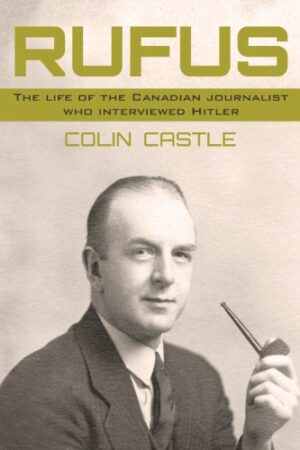
Colin Castle was born in England in 1936 and after army service in Berlin, studied history at Oxford and became a teacher. In 1964, he and his Canadian wife, Val, married in London but came to raise their children in BC, where he taught history in West Kelowna schools for thirty years. This book is the story of Val’s grandfather, the one she never knew.
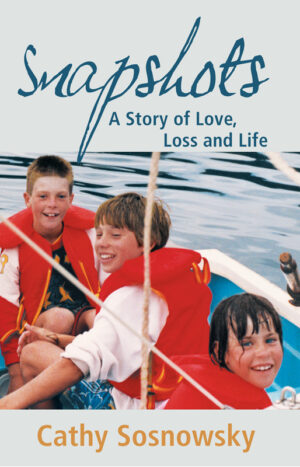
This touching and exquisitely written autobiography follows a mother’s journey, framed by snapshots, through the loss of her 17-year-old son, Alex, in a freak accident, and her two late-adopted children to drugs and the streets. From this darkness, Sosnowsky learns to transform her grief into hope and, eventually, through her involvement with The Compassionate Friends — an international self-help organization of bereaved parents — to help other bereaved parents heal through her poignant poetry and compassionate listening.
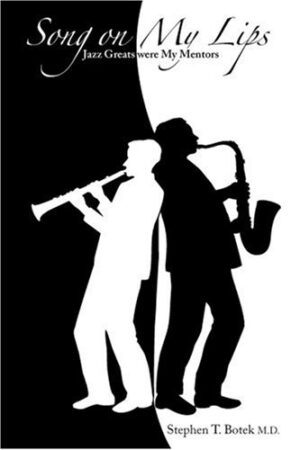
Stephen grew up in a musical family and trained as a jazz musician from a young age. Following his career as a clarinetist and chorus member in the US Air Force Band, he entered Columbia University to major in psychology and pre-med. He became a medical doctor and eventually a psychiatrist. At home and abroad, he has enjoyed playing both the clarinet and the saxophone, rubbing shoulders and sharing the stage with many extraordinary musicians. He lives in New York City.
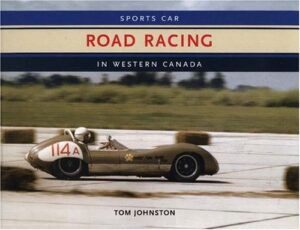
A historical study of sports car road racing in Western Canada also documents lost race tracks, attempts to build new tracts, currently operational tracks, and amateur tracks.
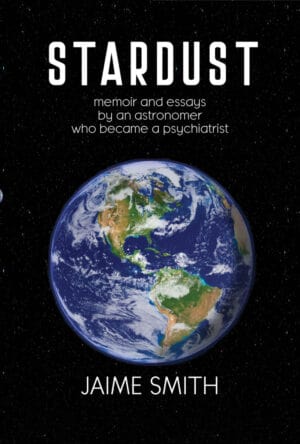
Jaime Smith, MD, FRCPC was born in Appleton, Wisconsin, and upon completing his undergraduate studies in Humanities at the University of Minnesota moved to Argentina to work as an astronomer at the national observatory, leaving behind the political framework of a country that he no longer supported.
Smith’s path would ultimately lead him to British Columbia, where he was a university teacher in Physics, Mathematics and Astronomy before changing careers, receiving his M.D. followed by four years of training in psychiatry at the University of British Columbia.
Smith was a participant in the fight to de-stigmatize homosexuality within the medical community and served on the front line of the AIDS epidemic in Vancouver, BC. A widower since 2011 he has three daughters, seven grandsons and four great-grandchildren.